Two stories came out this week, one from Pennsylvania and one from Ohio related to virtual schooling (cyber schooling in PA).
In Pennsylvania, Agora is in trouble with the PA Dept of Education over accurate data.
In Ohio, ECOT is being questioned by the the Dept. of Ed in Ohio about recording of attendance (which equals funding).
Recently, K12 in their quarterly report announcement bragged about a 289 basis point increase in retention rates. It is unusual because it is an investment term and they are, in essence, describing students in terms of investments. One basis point is the equivalent of 1/100th of a percentage, meaning 289 basis points equals 2.89% increase. I guess 289 sounds better and larger than 2.89%. Now, if they are serving over 100,000 students, 289 (or 2.89%) is a decent increase until one remembers how many students are leaving annually (estimated around 35%, or 3500 basis points, to 50%, or 5,000 basis points). That creates a different perspective doesn't it.
I also did a search (multiple searches really) in an effort to try and find success stories related to virtual schooling (other than those put out by the schools themselves). Interestingly, I could not find one.
Where are the success stories?
I'm keeping the faith in virtual schooling but the light is dimming.
Perhaps now we can quit trying to rearrange the deck chairs and create a radically different model.
houston@figment-consulting.com
Showing posts with label virtual schooling. Show all posts
Showing posts with label virtual schooling. Show all posts
Friday, May 20, 2016

Tuesday, May 3, 2016
It's only mountains

But, do we know how to make a molehill out of a mountain?
Whether a mountain or a molehill you can still simply go around.
You can also go over either one.
And remember, the view from the mountain is more breathtaking than the one from the molehill.
We can help you navigate the path and enjoy the journey.
houston@figment-consulting.com
Friday, March 18, 2016
Ten things homeschoolers want virtual schools to know
1. Virtual schooling is not homeschooling though both are done primarily in the home, so don't tell us it is.
2. True flexibility is found in homeschooling, so find another word when we talk
3. Individualized learning, real individualized learning, is what homeschooling is all about
4. There are close to 2 million of us homeschoolers and no we don't all think alike
5. The small, yet sometimes loud minority of those homeschoolers who speak up don't speak for all of us
6. Don't talk to us about the free tuition because we know there is a cost
7. Freedom matters a great deal to us, and we won't give it up easily, even for something free
8. There are close to 2 million different reasons why us homeschoolers have chosen to homeschool
9. We are real people at the end of your data point, don't forget that
10. When we say "no" to your virtual school, what we are really saying is we don't trust what you are telling us
houston@figment-consulting.com
2. True flexibility is found in homeschooling, so find another word when we talk
3. Individualized learning, real individualized learning, is what homeschooling is all about
4. There are close to 2 million of us homeschoolers and no we don't all think alike
5. The small, yet sometimes loud minority of those homeschoolers who speak up don't speak for all of us
6. Don't talk to us about the free tuition because we know there is a cost
7. Freedom matters a great deal to us, and we won't give it up easily, even for something free
8. There are close to 2 million different reasons why us homeschoolers have chosen to homeschool
9. We are real people at the end of your data point, don't forget that
10. When we say "no" to your virtual school, what we are really saying is we don't trust what you are telling us
houston@figment-consulting.com
Friday, March 11, 2016
Waste is a terrible thing to mind

We mind waste when we spend all of our time prepping for these tests instead of fostering a learning passion that goes beyond memorization and test-taking skills.
We mind waste when we bypass what the child wants to learn so we can make sure they understand what we think they should know.
We mind waste when we treat each student the same.
We mind waste when we treat certain students differently than others.
We mind waste when we measure the wrong results.
We mind waste when we continue to tweak instead of re-imagine.
houston@figment-consulting.com
Wednesday, February 10, 2016
Zero to One: It's time to quit pretending
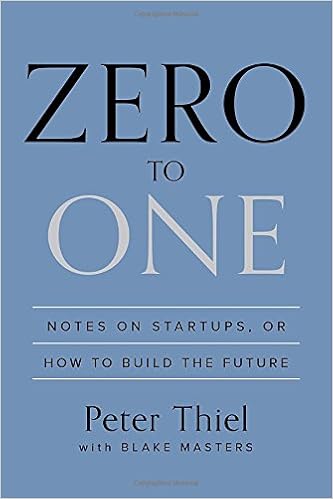
Paypal (of which Thiel was a founder) took online payments from 0 to 1. Elon Musk, CEO of SpaceX and Tesla, is an individual focused on going from 0 to 1. Mark Zuckerberg took us from 0 to 1 when Facebook was created.
As Thiel states though, "It is easier to copy a model than to make something new; doing what we already know how to do takes the world from 1 to n, adding more of something familiar."
When full-time virtual schools were introduced they took education from 0 to 1. They were an "act of creation, and the result was something fresh and strange."
Now, virtual schools are attempting to move from 0 to n. Remember, it is easier to copy a model, to do what we already know how to do. The problem is that the current n is not worth modeling.
My energy and effort is centered on the desire to have us rethink n and return to creating something new, with the hope of moving us again from 0 to 1.
Let's stop pretending. It's time to create something new in virtual schooling.
houston@figment-consulting.com
Friday, December 4, 2015
A story to tell

Everyone in line was exhausted after standing in line waiting to enter for well over 20 minutes. Adding to the exhaustion it was approaching midnight as we turned the corner because we were all there for Mickey's Very Merry Christmas Party at the Magic Kingdom in Walt Disney World -- a ticketed event that starts at 7 p.m. and ends at midnight.
We were third in line but the room was quiet enough and secluded enough where you could hear Mickey visiting with the guests who had come to see him.
The first family made their way over, their little boy strolled up to Mickey, handed him his autograph book and then they each posed for photos. The two Cast Members (one an assistant and the other a photographer) played their roles very well, staying in character, and adding to the show.
Next, just in front of us, was a man in a motorized scooter and his son, who had to be at least 15 years old. I could easily tell that his son had some sort of mental disability, and my guess was autism. But, when his son approached Mickey, he clearly thought he was with THE Mickey Mouse -- there was no doubt in his mind this was the real Mickey. He hugged him over and over. They visited with each other and he continually whispered something in Mickey's ear to which Mickey responded each time with encouragement, to the young boy's delight.
In what normally takes a minute, two at the most, to move through, grab a photo, and then move on, took almost five minutes. The boy did not want to leave, and the Cast Members, along with Mickey, did not want to interrupt what was clearly a special moment occurring.
For us, and the rest of the families in line witnessing this moment, it was something that seemed to cause time to stand still. None of us said a word, made a sound, or even moved. We all simply watched with amazement at what was transpiring between Mickey Mouse and this young boy.
At last, his father edged out of his scooter, called his son, walked over to him and guided him away from Mickey. All the while the boy kept his eyes on the one person he had come to see. And, as they departed, we all took a brief moment to collect ourselves before taking our turn with Mickey.
When we exited, all my wife and I could say to each other was, "Wow, that was amazing."
Fast forward 30 minutes and we are across Town Square at the Magic Kingdom and I am waiting on our other children to join us at the Christmas tree as my wife takes our youngest daughter to the restroom. Approaching me on his scooter is the boy's father, and he comes to a stop just a foot away from me.
"You are the father of the young boy who just visited Mickey aren't you?" I asked him.
"Yes, I am," he said in a hesitant manner.
"I cannot tell you how much of a privilege it was to be a part of what we just witnessed in there," I told him.
Relief seemed to come over his face, and he grinned from ear-to-ear. "Thank you," he said. "My son has autism and he lives for that, for meeting Mickey Mouse. He absolutely adores Mickey."
"Well, it was evident to my wife and I that was the case. Again, we were just glad to be part of it," I said.
"You know, most of the time, people get frustrated at us, and even make comments about us taking too long," he answered. "But they don't know our story and why it is so important to him. I mean, he has written stories about Mickey and wants to work for Disney when he grows up. When he meets Mickey, he believes he is talking to a real Mickey Mouse, and that's why he whispers in his ear all the time."
"Tell your son to dream big and we look forward to the day when he greets us as a Cast Member," I told his father, seeking some way to encourage him for a brief moment.
"Thank you, I will," he said. And then he drove off.
I wish I could say that I responded like this every time I have had the opportunity, but I haven't. However, my interaction with this man reminded me, reaffirmed to me that each family has a story to tell.
So often though, others won't take the time to listen.
During this time of year, be a listener. There are families around you, people close to you, strangers among you, and each one has a story to tell. The question is, who will listen?
houston@figment-consulting.com
Friday, November 20, 2015
The time horizon of change

Construction began in 2014.
Yesterday I toured Disney's Animal Kingdom and construction was still going on for the area that will be known as Pandora - The World of Avatar. Yesterday was November 19, 2015.
Expected completion date could be in 2017 for part of the land but full completion may be in 2019. If my math is correct 2019 would be eight years after first announcing the agreement.
Right now almost half of Disney's Hollywood Studios is closed off to guests as they build themed attractions around the Star Wars franchise they purchased from George Lucas several years ago. Completion of these attractions is a few years away.
In Epcot construction is underway in the Norway pavilion for a Frozen-themed attraction. Due to be completed in the near future, this new attraction was launched by the blockbuster movie that debuted in 2013.
In today's NOW economy it is difficult to remember sometimes that change occurs at a pace all to itself. In the world of attractions that pace of change can be years.
The same is true in the realm of existing virtual schools. Changing marketing strategies or branding efforts can be done quickly -- hire a new firm with the bright and shiny accouterments and everyone feels like change is happening. Everything has a fresh coat of paint so everyone thinks it is new, yet the cracks remain.
However, the real change required, the kind of change that impacts the students and families, the kind that makes a difference takes a little longer -- this change requires more than a marketing paint bucket.
The obstacle most virtual schools run into when considering this undertaking is they shorten the time horizon allotted for this change to occur. If it cannot be completed in one enrollment cycle then the pain is too much to bear.
The average Disney World guest visits the parks every three to four years. This means a guest at the park in 2011 when the Avatar deal was announced will visit the parks two more times before the new attraction is completed. They will be eight years older.
The difference is Disney understands the concept of time horizon. They understand that short-term pain will be offset by long-term gain.
What is true for Disney can also be true for virtual schools. The current model is broken. It's time to make the public announcement that a deal has been reached and for one virtual school in each state to step up and become the standard by which all others will soon want to follow.
The short-term pain will be offset by the long-term gain.
houston@figment-consulting.com
Wednesday, October 28, 2015
Building a retention culture in virtual schools

A retention program focuses on trying to keep students and families from leaving.
Retention culture: a way of life of a group of people -- the behaviors, beliefs, values, and symbols that they accept, generally without thinking about them, and that are passed along by communication and imitation from one generation to the next
A retention culture offers students and families a place to belong.
houston@figment-consulting.com
Friday, September 18, 2015
Virtual schools and socialization.

Most virtual schools tend to rely on the traditional field trips, online clubs, and even virtual field trips to fill this void and overcome the lack of student engagement. Unfortunately the results are minimal at best. Attrition rates continue to remain high and socialization (or lack thereof) is often cited as a reason for many parents who choose to remove their child. It is ironic when you look at the offerings provided by each virtual school to offset this and realize many of them are working hard and providing families with a multitude of options to interact and engage -- zoo trips, museum trips, online activities, clubs, and much more.
So, what is going on? My experience tells me that virtual schools are actually trying to solve the wrong problem. By focusing on socialization they are working hard to put band aids in place when the real wound is something else.
One need only to look at the current environment to better understand what is going on. Facebook, Instagram, Snapchat, Twitter, and other social platforms provide us a glimpse into the real issue. Each is built not on the idea of socialization but on Connectionalization (I know it is not a real word but one day it may be).
Students are looking for a place to connect, not socialize. They want to belong. As I mentioned in my Virtual School Manifesto: Nine Essential Ingredients, socialization is the school dance. It is organized by the school, promoted by the school, and monitored by the school. Then, students show up and many of them simply stand around and watch a few have a good time.
On the other hand, Connectionalization is what occurs in the hallways where friendships form and tribes emerge. It's organic more than it is scripted. Many times it is student led which can be frightening for many administrators. Yet, it creates an environment where students can feel like they belong.
Virtual schools who want to engage their students, retain more of them, and make them happy will become obsessed with being a Human Connection school.
It is Essential #7 in my Manifesto, and right now it is sorely lacking in virtual schools.
houston@figment-consulting.com
Tuesday, September 8, 2015
Virtual School Manifesto: Essential Ingredient #1

1. Place the teacher-student relationship in the center
The current model of virtual schools proudly places the student at the center, then encircles that student with technology, content, teacher support, intervention, test prep, and more. They message it out as putting students first, revolving around the student, or everything we do is about the student. They each have the student serving as the foundation upon which they are building everything else.
Unfortunately, the foundation is crumbling. And, instead of addressing the real issue, online providers and educators come together at their annual conference in order to showcase new technologies for their Learning Management Systems (LMS) in order to allow more timely teacher interventions. Or, they tout new gaming-type graphics and media that will engage students. Next, they adopt new terms such as competency-based or adaptive learning in order to demonstrate ongoing progress. And, finally, they share best practices among each other when no one is succeeding in such a way that should be followed.
And, when all else fails, they seek to implement variances of the model, moving today toward a blended learning approach instead of full virtual.
All the while they ignore the foundation. What if they were to change the core concept upon which they build? Instead of placing the student at the center, place the teacher-student relationship there and see what possibilities emerge.
A simple change such as that could do wonders for the way in which technology is utilized.
John D. Rockefeller understood this concept at the turn of the last century. No, not the virtual school concept, but rather he understood the real role railroads played in the building of America. Tom Scott and Cornelius Vanderbilt believed railroads were the foundation to build upon. Rockefeller saw it differently.
Rockefeller utilized the railroads in order to transport his product, oil, into the homes of Americans so they could have light. For him, the railroads were merely a conduit to move his product from Point A to Point B. So, when Scott and Vanderbilt, rivalries at the time, combined efforts in order to squeeze more money out of Rockefeller, it backfired on them. Instead of caving in, Rockefeller began to build the nation’s first oil pipelines because he rightly understood the foundation of growth was in the oil, not in the transportation of it.
Fast forward to today and we have another oil v railroad situation. Too many online providers and educators view technology as the oil when in reality it is merely the railroad. And, just as the railroads gave way to the airplanes so too will current technology give way to future advancements -- mobile is outpacing personal computers, tablets are outpacing laptops, and so forth. Ten years ago there was no app industry.
The problem remains in that everyone is focused on building a better railroad, or inventing the airplane in order to replace it. When, in reality, they should be focused on the real oil, in this case, the teacher-student relationship.
In the world of virtual schools it is still the teacher-student interaction that carries with it the potential to inspire learning. The current model relegates teachers to the same level as the technology and asks them to serve as interventionists or mere supporters/cheerleaders. This not only diminishes their role but it also severely inhibits their ability to impact the learning by the student.
Imagine instead a virtual school model that is built upon the foundation of the relationship between the teacher and the student. Imagine a virtual school that understands the vitalness of this interaction and builds everything to encircle it instead of merely the student. This is not to diminish the role of technology, it is merely to ask it to serve the proper focus and foundation.
Teachers inspire learning. Teachers, equipped with powerful technology have the potential to powerfully inspire learning. Technology should serve as the conduit to transport the relationship between the teacher and the student. Technology is not the oil, the relationship is.
I purposely state it as teacher first then student when speaking of the relationship. The teacher goes first in this relationship because they are the ones that can bring out the personal best within each student. They are the originators of the relationship. They are the ones that drive the breadth and depth of the relationship. The teachers are the ones that engage the students therefore they are first in importance, even when it comes to the student.
So, let’s establish our virtual school upon the foundation of the teacher-student relationship. Then, let’s see what emerges as we begin to build.
Taken from Virtual School Manifesto: Nine Essential Ingredients
houston@figment-consulting.com
Friday, May 1, 2015
The back door exodus of virtual schools

Most virtual schools spend all of their time trying to figure out how to keep students from leaving through this back door to no avail.
What they tend to forget is the critical element in this churn is not the back door, but the front door.
Spend more time on messaging properly, recruiting the right type of students to come in through the front door, and then you are off to the right start in reducing the churn rate.
houston@figment-consulting.com
Tuesday, March 10, 2015
California Virtual Academies issues
A friend forwarded this report to me on the California Virtual Academies (CAVA), managed by K12, Inc. It is a report from the group, In the Public Interest, and it is a scathing look into the way CAVA and K12 are intertwined.
But, is it accurate? According to K12, the report was conducted as leverage for the California Teachers Association (CTA) and their push to unionize the CAVA teachers.
I do appreciate the finding by In the Public Interest that the concept of virtual schooling is a great option for some students. Again, my concern is the concept and the implementation are becoming synonymous, so it is refreshing to see the two be separated in a report such as this.
Virtual schooling is a great option for the right student -- the one willing to put in the work, daily.
houston@figment-consulting.com
But, is it accurate? According to K12, the report was conducted as leverage for the California Teachers Association (CTA) and their push to unionize the CAVA teachers.
I do appreciate the finding by In the Public Interest that the concept of virtual schooling is a great option for some students. Again, my concern is the concept and the implementation are becoming synonymous, so it is refreshing to see the two be separated in a report such as this.
Virtual schooling is a great option for the right student -- the one willing to put in the work, daily.
houston@figment-consulting.com
Monday, February 23, 2015
And the Oscar goes to . . .
. . . those who stay weird, stay different.
Screenwriter Graham Moore's acceptance speech was easily one of the highlights of last night's 87th Academy Awards Presentation in which he encouraged teens (yet each of us really) to "stay weird, stay different."
I believe that is part of the promise virtual schooling holds -- it allows students to be themselves, to learn their own way, to explore their passions, to follow Graham's exhortation.
Students in virtual schools can move beyond the confines of the seats in traditional schools, discover what lies outside the walls of brick-and-mortar buildings, and learn to see the world in new and fascinating ways.
We celebrate the weird, the different each February when it comes to the Oscars. What if we did the same each and every day within the realm of education. What if we honored each student for who they are and who they desire to be.
Virtual schooling provides us with this opportunity.
It offers us the chance to expand the categories to fit the student instead of working to fit more students into fewer categories.
It gives us the freedom to see the world through each of their eyes instead of telling them what they need to see. And, when we begin to do that we are then on the verge of opening up the future in ways unknown, and that is when potential can be fulfilled.
houston@figment-consulting.com
Screenwriter Graham Moore's acceptance speech was easily one of the highlights of last night's 87th Academy Awards Presentation in which he encouraged teens (yet each of us really) to "stay weird, stay different."
I believe that is part of the promise virtual schooling holds -- it allows students to be themselves, to learn their own way, to explore their passions, to follow Graham's exhortation.
Students in virtual schools can move beyond the confines of the seats in traditional schools, discover what lies outside the walls of brick-and-mortar buildings, and learn to see the world in new and fascinating ways.
We celebrate the weird, the different each February when it comes to the Oscars. What if we did the same each and every day within the realm of education. What if we honored each student for who they are and who they desire to be.
Virtual schooling provides us with this opportunity.
It offers us the chance to expand the categories to fit the student instead of working to fit more students into fewer categories.
It gives us the freedom to see the world through each of their eyes instead of telling them what they need to see. And, when we begin to do that we are then on the verge of opening up the future in ways unknown, and that is when potential can be fulfilled.
houston@figment-consulting.com
Subscribe to:
Posts (Atom)